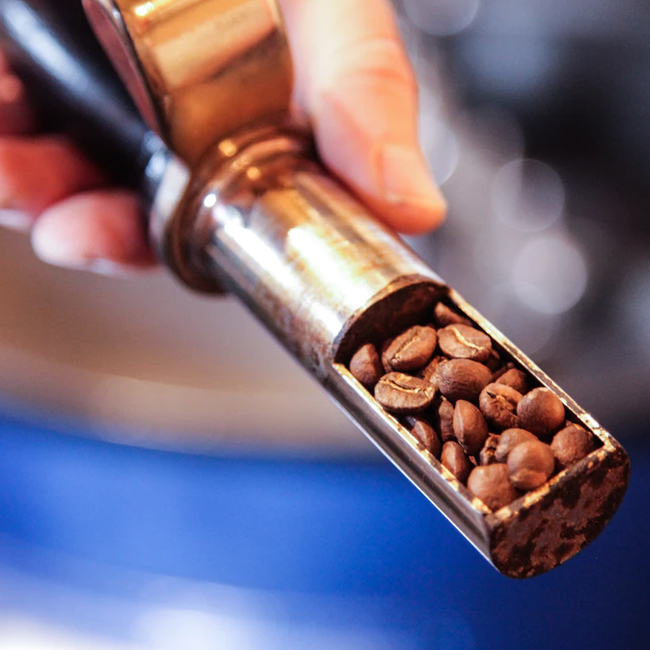
Want To Start Roasting Your Own Coffee Beans?
We can help! Browse our articles on roasting your own beans and place your order today!
What Is Involved in Coffee Roasting?
Basically, you will be taking raw green unroasted coffee beans and applying heat to them for approximately 10-15 minutes until they reach the shade of brown or ‘doneness’ that you are looking for and then you cool them as quickly as you can with a fan to room temperature. At this point, you can grind and brew coffee that you roasted yourself! Sound awesome? You bet! It can be an addictively rewarding hobby. One where you come to realize that the more you think you know about roasting coffee the more you come to understand that there is yet more to learn. The variations in the application of time and temperature create new and different flavors in the beans. It takes skill and experience to really create a coffee with exceptional cup notes. However, if you are like most of us coffee roasters you will likely believe your coffee that you roasted yourself is better than any other even if your ‘profile isn’t perfect’. Yes, it is truly rewarding to roast your own beans.

What You Will Need:
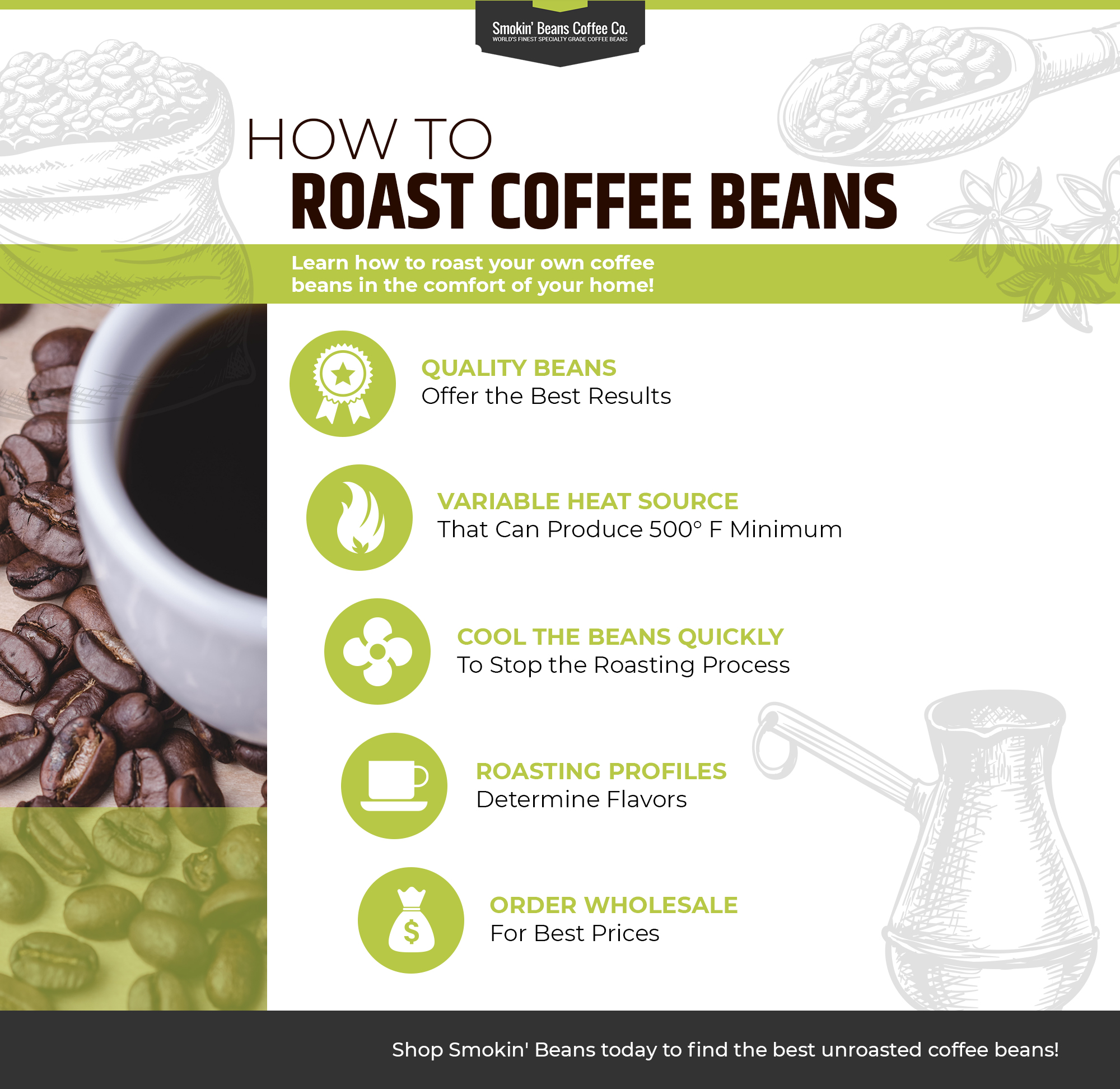
 Quality Beans: Always start with fresh high-quality beans for the best results. Yes, you can manipulate the flavors by adjusting your roast profile but you can never create flavors that aren’t already present deep within the beans. Higher quality beans have flavor compounds in them that an experienced roaster can easily bring to the front, dazzling in the cup. Because of the exceptional qualities inside the beans, higher quality beans do cost more per pound. However, when roasting your own beans you get to purchase green beans at a much cheaper price than already roasted coffee making this yet another reason to roast your own coffee beans.
 Variable Heat Source: You will need a heat source that can produce at least 500*F of even heat on the beans. Even heat can be accomplished by stirring, tumbling, or hot air blowing. In order to develop those delicious flavors, the beans need to cook evenly from surface to core. Usually, you will start the roast with high heat inputs until the beans begin to yellow; after yellowing, you gradually turn down the heat in a carefully measured manner by a few degrees per minute until the beans turn brown and begin popping (sounds like popcorn). This popping will last for 20-30 seconds after this you can remove the beans from the heat source and cool them quickly. This total roasting process from green until roasted should take place in 10-15 minutes depending upon the capabilities of your heat source and its roasting efficiency.
 Fan to Cool the Beans: It is essential to cool the beans quickly in order to stop the cooking (roasting) process. At the point, you pull the beans from their heat source they will likely be around 400-450*F. You will want to cool them to room temperature within 2-3 minutes if possible to have the best flavor in the cup. Stirring in a metal colander with a fan blowing on them works quite satisfactorily.
 Roasting Profiles: Over time you will come to realize that different beans develop differently during the roasting process. In order to bring out the best tastes in the cup, you will need to approach different beans in a different manner in order to bring out a better taste in the cup. Some beans like more heat at the beginning of the roast and some like less heat at the beginning of the roast for example. Some beans like a steeper descending ROR (rate of rising; temperature per change per minute) than other beans. These variables and requirements that of various beans for most excellent flavors to develop can be either an obstacle or an enjoyable challenge for the aspiring coffee roaster. It is these interesting variables of beans, time, and temperature that make coffee roasting so uniquely enjoyable and rewarding.
Guide To Choosing Your Roasting Profile:
Embark on your journey to an exciting exceptional cup of coffee by choosing your own roast style!
 Cinnamon Roast
A very lightly roasted coffee style that is dropped at beginning of the first crack. Features a light aroma with a light body, the cup has an exceptionally light roast taste throughout. This style has become trendier in recent years but may be more of an acquired taste that comes over time for many people. The bean surface is dry.
 Light Roast
A more developed light roast style that is dropped towards the end of the first crack. Its acidity is bright, the body is more developed, a fruity sweetness is beginning to present itself, and the cup resonates with an awesome light roast taste. This style has developed a notorious following among coffee connoisseurs lately. The bean surface is dry.
 Blonde Roast
A balanced light/medium roast style that has become quite popular beginning in the Northeastern states in recent years. It features a bright, desirable fruit-like acidity, the sweetness is more pronounced, the body is good, with an overall bright, fruity, complex cup profile. The bean surface is dry.
 Medium Roast
A style that was once popular primarily in the Western states but now is found throughout the country. Sometimes called a City Roast, this is a dry coffee with no surface oils. At this roast level, the aromatics are nearing their peak, and the cup is charged with complexity. The body is developing quite nicely, the acidity is not as bright as found in the lighter roasts, easily making this our sweetest roast level for most beans. This style has become a highly favored sweetheart for many of our customers.

Full City Roast
This style is probably still the most typical for a large percentage of coffee drinkers. It is a medium/dark roast with the bean surface being mostly dry and only a few droplets of surface oils beginning to form. At this roast level, the cup remains balanced, complex, and is sweeter than can be found at the very lightest roast levels or at the very darkest roast levels. The aroma is at its peak levels, body and mouthfeel are round and full, providing an overall delicious cup with a nice pronounced finish.

Espresso Roast
Also called Light French, this is a dark roast style that refers to the degree of roast, it is dark brown in color with an oily surface. The advantage is maximum body and texture, yet with a pleasant sweetness creating a balanced cup. The dark roast character is beginning to appear in the cup. Many coffees roast well at this level and remain complex. It is a popular choice for coffee lovers wanting that full-bodied chocolaty cup of coffee.
 Italian Roast
This style is also known as French, Italian, or Turkish. It is a very dark brown oily style of coffee. Acidity is low, the body is full, while there is still a sweetness present in the cup. Smoky undertones are beginning to appear in the cup. This style is quite common in the espresso culture and is that intense dark roast style that has been so prominent with many people in the coffee culture.
 Heavy French Roast
A very dark brown style also called Dark French, Spanish, or Heavy Italian. The cup quality has changed dramatically, with burnt undertones masking the remaining cup attributes. Aroma, sweetness, and body fade as the pungent smokiness dominates the cupping notes. There is a definite following for this intensely strong style of very dark roasted coffee among U.S. coffee drinkers.